

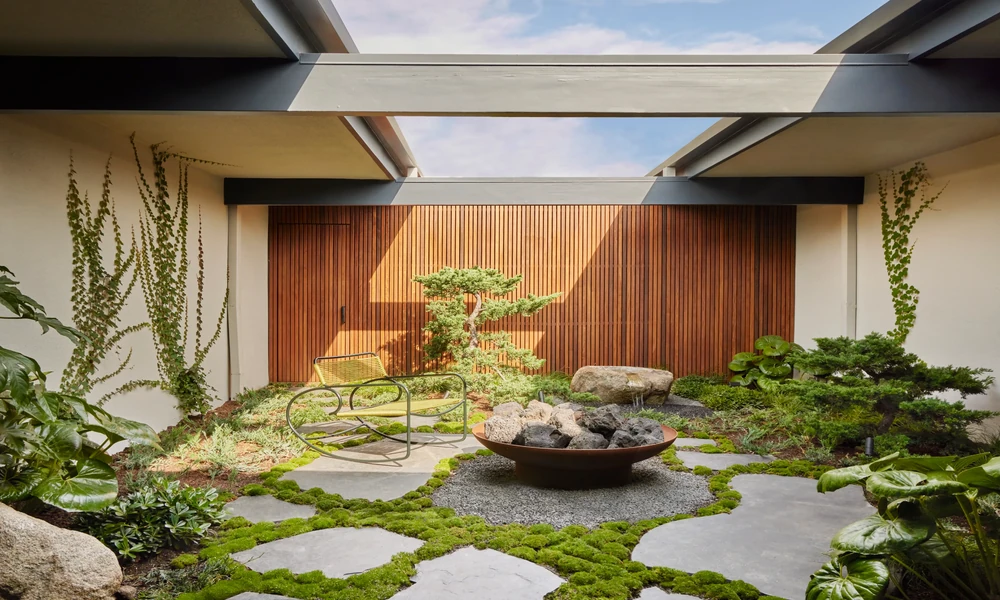
Most backyard renovations age badly. Trendy pergolas start to look dated in five years. Outdoor kitchens get used twice a summer. A Japanese garden, though, gets better with every season that passes. It was designed that way on purpose, and that’s something most homeowners completely miss when they’re comparing landscape ideas.
The philosophy behind Japanese garden design is not a style. It’s a worldview. And that worldview produces spaces that are genuinely hard to replicate with a contractor who just copies the visuals without understanding the intent. If you’re weighing whether to invest in one, the answer isn’t just about aesthetics. It’s about what you’re actually building and why it lasts.
The Philosophy That Makes It Different From Every Other Garden Style
The concept of wabi-sabi originated from Zen Buddhism, particularly from the teachings of impermanence and simplicity. That word, wabi-sabi, gets thrown around a lot in interior design circles, but its garden applications are older and more specific. In Japanese, “wabi” connotes rustic simplicity, quietness, or understated elegance, while “sabi” means beauty or serenity that comes with age.
What that means in a practical garden context: nothing is centered. Nothing is perfectly symmetrical. Unlike Western gardens that often use symmetrical layouts, Japanese gardens embrace asymmetry, avoiding uniformity to create a more relaxed and natural appearance. The moss on a stone is not a maintenance failure. That’s the whole point. Age and weathering are visual achievements, not problems to correct.
In Japanese garden design, wabi-sabi manifests through asymmetry, aged materials, and an appreciation for the transient nature of life, contrasting sharply with Western ideals of symmetry, perfection, and control over nature.
This matters for planning purposes. A client who expects a manicured, perfectly groomed space is probably thinking of a European formal garden. A Japanese garden asks you to appreciate the imperfect rock placement, the slightly irregular stepping stone path, and the bamboo that leans just a little more every year. If you can accept that, you’ll love the result. If you can’t, you’ll fight it constantly.
Diane Durston, Curator Emerita for the Portland Japanese Garden, writes that wabi has been defined as “tranquil simplicity; austere elegance; unpolished, imperfect, or irregular beauty” – and that with both aesthetic and philosophical meanings, wabi-sabi is “perceived as too vast to explain or define precisely.”
That quote, sourced from the Seattle Japanese Garden’s blog, captures exactly why the style is so enduring. Precision is not the goal. Resonance is.
A Quick History Worth Knowing Before You Design
Japanese gardens began as simple open spaces intended to attract kami, or spirits. During the Kamakura period, Zen ideals began to influence Japanese garden design, as documented by Britannica’s entry on Japanese gardens. By the Muromachi period (1338 to 1573), gardens had evolved from contemplative views into spaces to actively walk through and experience as miniature landscapes.
In modern Japanese gardens, flowers are few and evergreens popular. Simplicity, restraint, and consistency are sought rather than gaiety, showiness, or the obvious variations of the seasons.
That restraint is deliberate. It creates a space that works year-round without relying on a blooming schedule. Your garden looks good in January. That’s a rare thing in most residential landscapes.
The Elements That Actually Define the Style (And What to Pick First)
Every element in a Japanese garden is doing two jobs at once: the visual job and the symbolic one. Water symbolizes purity and renewal. Rocks represent permanence or mountain peaks. Moss suggests the passage of time. Raked gravel evokes flowing water without a single drop of it.
The garden is sometimes made to appear larger by placing larger rocks and trees in the foreground, and smaller ones in the background. This borrowed-perspective technique is one of the reasons Japanese gardens feel expansive even on tight residential lots. A skilled designer can make 800 square feet feel twice as large.
Here’s a practical decision framework I call the S-S-B method for planning your feature priorities:
- Stillness anchor: Choose one dominant water feature or dry rock bed as your garden’s emotional center. Everything else radiates from it.
- Structure layer: Add stone lanterns, stepping paths, and specimen evergreens as the permanent bones of the design. These age beautifully and never need replacing.
- Breath layer: Introduce bamboo, ornamental grasses, or moss as the living elements that shift with season and weather, giving the garden movement and sound.
Get those three layers right and the composition holds together whether it’s a 200-square-foot courtyard or a full half-acre estate.
The ROI Angle Most Homeowners Don’t Think About
Here’s the thing: a thoughtfully designed Japanese garden is not just a personal sanctuary. It’s a property asset. The National Association of Realtors’ 2023 Remodeling Impact Report on outdoor features puts hard numbers behind that: standard lawn care service returns 217% of its cost at resale, while an in-ground pool returns just 56%. The implication is clear. A landscape that signals ongoing care and distinctive design thinking outperforms flashier, single-use outdoor features.
The NAR adds important context from the agent side: 97% of Realtors believe curb appeal is important for attracting buyers, and 92% recommend sellers improve their curb appeal before listing, according to Opendoor’s analysis of the NAR data.
A Japanese garden delivers something beyond curb appeal, though. It delivers a story. Buyers remember the garden with the bamboo grove and the koi pond. They don’t remember the fourth identical pressure-washed patio they toured that weekend.
| Outdoor Feature | Typical Resale ROI | Notable Strength |
|---|---|---|
| Standard lawn care | 217% | Highest ROI of any category (NAR 2023) |
| Paver patio | 95-100% | Durable; pairs well with garden hardscape |
| In-ground pool | 56% | High cost, climate-dependent appeal |
| Professional landscape design | 100-200% | Widest ROI range; design quality is the variable |
Sources: National Association of Realtors 2023 Remodeling Impact Report: Outdoor Features.
What Makes the Miami Context Unique
Adapting Japanese garden principles to a subtropical climate like South Florida’s requires a real conversation with someone who knows both traditions. Traditional Japanese plants like Japanese maples or Hinoki cypress don’t love Miami’s heat and humidity. But substitute species, including certain bamboos, ornamental ferns, cast iron plants, and flowering ginger, carry the same visual weight without the climate mismatch.
The Miami Contrast scenario: imagine a spare, gravel-and-stone dry garden set against the lush tropical canopy that South Florida provides naturally. The borrowed landscape technique mentioned earlier works brilliantly here. The native palms and bougainvillea beyond your fence line become a dramatic backdrop for a minimalist foreground composition. That’s a design outcome you genuinely cannot get in New England or the Pacific Northwest.
For homeowners who want to get this right the first time, working with specialists in Japanese landscape design in Miami matters enormously. The balance between authentic principles and climate-appropriate plant selection is where most amateur attempts fall apart.
How to Start Planning Without Overwhelming Yourself
You don’t need to design the whole garden at once. Most successful Japanese gardens are built in phases over years. Start with the bones: the path, one water element, and your primary stone or rock placement. Live with it through a few seasons before adding layers.
Four questions worth answering before you call a designer:
- Do you want an active walking garden or a viewed garden (one you look at from inside or from a fixed seat)?
- How much ongoing maintenance do you realistically want? Dry rock gardens are lower maintenance than koi ponds. Both are valid.
- What’s the primary mood you’re after? Playful and exploratory, or still and contemplative? These produce very different compositions.
- What existing site features can the design borrow from, like mature trees, a fence line, or a view?
Answer those four questions honestly and you’ve already done most of the strategic work a designer needs from you. The rest is their expertise to translate.
A Japanese garden built with real understanding of its philosophical roots doesn’t just sit in your backyard. It changes how you use the space, how you start your mornings, and, yes, how buyers perceive your property when the time comes to sell. The question isn’t really whether it’s worth doing. It’s whether you want a garden that ages into something better, or one that ages into something you’re embarrassed by. Those are the only two options on the table.
