

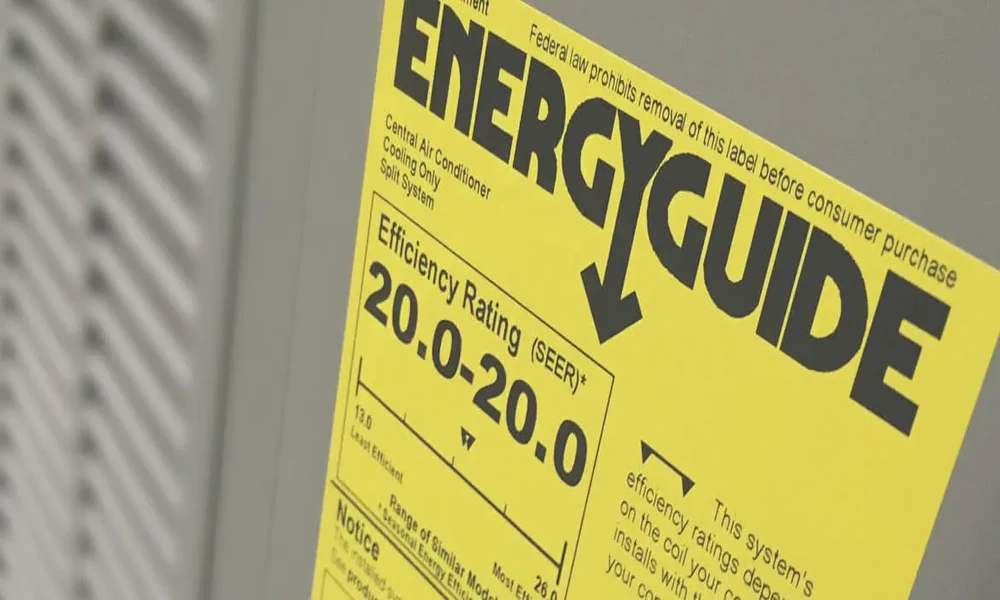
The yellow sticker on a furnace tells you one number and hides three. That number, AFUE, is real, but it is only the headline. Two furnaces with the same rated efficiency can cost you wildly different amounts to run because of how they were sized, installed, and controlled. I have watched homeowners pay thousands for a high-efficiency unit and then call me a season later wondering why the gas bill did not fall. The sticker was accurate. The purchase was not.
Here is the promise: by the end of this piece you will know what AFUE actually measures, which ratings matter for your climate and ductwork, and the installation details that quietly decide whether a rated efficiency ever reaches your wallet. If you have already decided to replace rather than repair, companies like A Plus HVAC furnace replacement services exist for that exact handoff, and knowing the numbers first means you can hold a contractor to specifics instead of adjectives.
Most buyers start at the showroom and work backward. Do it the other way around.
What AFUE actually measures (and what it leaves out)
AFUE stands for Annual Fuel Utilization Efficiency. It is the percentage of energy in the fuel that becomes heat in your home over a typical heating season, averaged across a test procedure. A 90 AFUE furnace turns 90 percent of the gas it burns into usable heat and sends the rest up the flue. That part is straightforward, and the Department of Energy maintains the efficiency standards that set the floor for new equipment sold in the country.
What the number leaves out is everything downstream of the unit. AFUE is measured in a lab, not in your basement. It does not know your ductwork leaks, that your return is undersized, or that the thermostat sits in a hallway warmed by an oven. A 96 AFUE furnace bolted to a leaking duct system can deliver less heat to your rooms than an 80 AFUE unit on a tight one. The number is honest about the box. It says nothing about the house.
If someone quotes you a rating and stops there, you have learned something about the quote.
Condensing vs. non-condensing: the fork in the road
Two ratings do most of the shopping work. Non-condensing furnaces sit in the 80 to 83 AFUE range. Condensing furnaces run 90 and up, and they squeeze extra heat out of the exhaust by cooling it until water vapor turns liquid. That extra stage is where the efficiency lives.
The catch is venting and drainage. A condensing furnace produces acidic condensate that needs a drain path and a plastic flue that can run sideways out a wall. If your home has an old masonry chimney and no easy drainage route, the install gets more involved. That is not a reason to avoid the high-efficiency unit. It is a reason to get the venting plan priced before you sign.
My stance: in a cold climate, buy condensing if the venting works. In a mild one with a short heating season, the payback math gets thin and a well-installed 80 percent unit can be the smarter spend. Efficiency you do not need is just a higher invoice.
Which efficiency ratings should you actually trust?
Use AFUE for comparison and the AHRI directory for verification. The Air-Conditioning, Heating, and Refrigeration Institute maintains a public directory that lists certified equipment and their ratings, so you can confirm the model on the quote matches the rating on the brochure. Model names blur across product lines. The directory does not.
Three numbers deserve a spot in your notes:
- AFUE for the annual efficiency claim, verified against the directory.
- BTU output for whether the unit can actually heat your square footage and your windows.
- Static pressure or airflow targets the installer will test after setup, which reveal whether the ducts can move the air the unit needs.
Notice the third one. Most buyers never hear the phrase. A furnace pushed through restrictive ducts runs hot, short cycles, and wears faster, and no rating on the sticker accounts for it.
The install details that quietly decide your real bill
This is the part I would write on a sticky note for every buyer. The rated efficiency is a ceiling, and installation determines how close you climb to it.
| Variable | What good looks like | How it hits your bill |
|---|---|---|
| Manual J sizing | Load calculated for your home, not guessed from square footage | Oversized units short cycle and waste fuel |
| Duct sealing | Leaks sealed and return sized to the blower | Leaky ducts lose conditioned air before it reaches a room |
| Commissioning | Gas pressure and airflow measured and set | Misadjusted units run below rated efficiency |
| Thermostat | Programmable or smart, scheduled to your routine | Setbacks cut runtime during empty hours |
Ask for the sizing calculation and the commissioning readings. A contractor who does the work will hand them over without a fuss. One who quotes from a catalog will change the subject. You now know which is which.
There is measurement science behind all this. The National Institute of Standards and Technology develops the test methods and reference materials that keep efficiency claims comparable across manufacturers, which is the reason an AFUE number means the same thing on two different brands.
A practical checklist for your next quote
Bring this list to every conversation and you will sound like someone who has done it before.
- Ask for the AFUE rating of the proposed model and verify it in the AHRI directory.
- Request the Manual J load calculation, or ask how sizing was determined.
- Ask whether duct leakage will be tested and sealed.
- Confirm the venting and condensate plan and get it in writing for condensing units.
- Ask what commissioning steps happen on install day, and what the readings should be.
- Get the warranty terms for parts and labor separately, in writing.
- Ask for the filter maintenance schedule and the model number of the filter the system expects.
None of that is exotic. It is just the work most buyers never think to ask about.
The bottom line on efficiency ratings
The sticker tells you how efficient the box can be. Your house decides how much of that you actually get. Buy a furnace suited to your climate and your ducts, verify the rating in a public directory, and make the installer prove the setup. Do those three things and the number on the yellow sticker will finally match the number on your gas bill.
Which number is on your current quote, and did anyone show you the sizing calculation behind it? If the answer is no, ask before you sign.
