

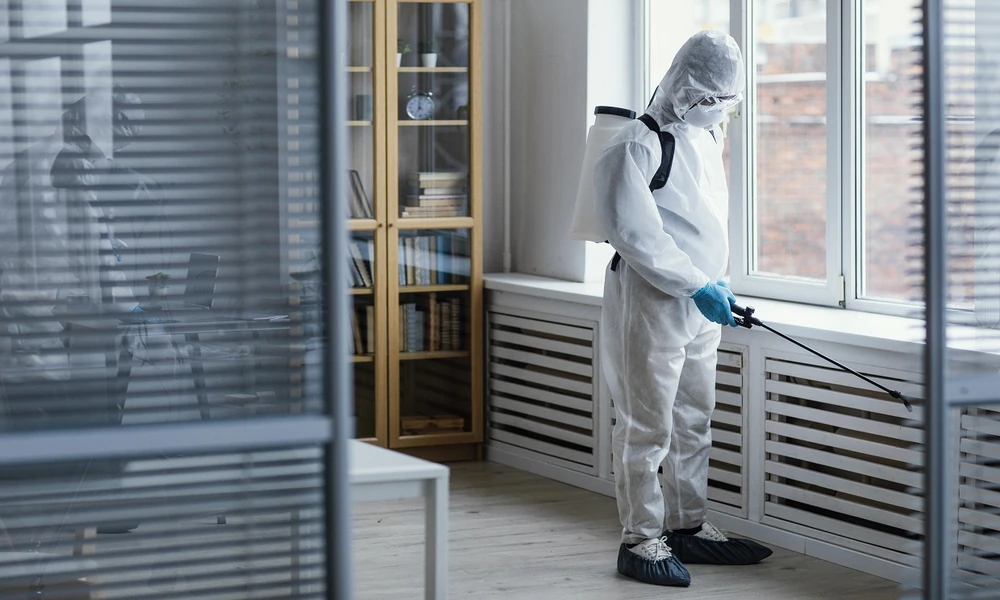
Across Dallas County and the growing towns to its east, October weather arrives at every address at once. Nights cool off, fall storms soak the Blackland Prairie clay, and insects that spent the summer outdoors start looking for shelter. What happens next depends less on the neighborhood than on the building. A slab home in Forney, a medical office in Mesquite and a busy kitchen in Garland each offer pests different entry points, food sources and hiding spots. Texas law even treats them differently when it comes time to apply a treatment indoors.
That building by building reality is how All Pro Pest Control Services has approached the work since 1999. The family owned company covers Dallas, Mesquite, Forney, Rockwall, Heath, Rowlett, Garland, Seagoville, Terrell, Crandall and Royce City. It treats homes, offices, restaurants, and commercial and medical properties for ants, cockroaches, spiders and termites, and handles bed bugs and mosquitoes as specialty services. Owners can choose a single treatment or year round protection, and a free termite inspection is the simplest way to see where a property stands.
Slab Homes on Shifting Clay
Most houses built in the eastern suburbs over the last few decades sit on concrete slabs poured over expansive clay. That soil drives nearly every pest problem these homes face.
Main pressure. Native subterranean termites, fire ants that rebuild mounds after fall rains, and American cockroaches and spiders moving in from flower beds as temperatures drop.
Weak point. The clay swells when wet and shrinks in drought, which cracks slabs and loosens the seals around plumbing penetrations. The Texas A&M urban entomology program’s guide to native subterranean termites explains that these termites have very little resistance to drying out and carry moist soil into the structures they infest. A wet fall following a dry summer pulls foraging workers straight to the foundation line.
What service looks like. A perimeter barrier using non repellent termiticide or a ring of bait stations, along with a check that several inches of slab stay visible above soil and mulch. Swarms in North Texas usually show up between February and May, so a fall inspection finds mud tubes months before winged adults appear on windowsills. Formosan termites, a more aggressive species, have also been detected in the Dallas and Fort Worth area, which gives annual inspections more weight than they had a generation ago.
Older Homes and Rental Properties
Pier and beam houses in established Dallas and Mesquite neighborhoods carry a different risk profile, and rentals of any age add tenant turnover into the mix.
Main pressure. Crawl space termites, rodents seeking warmth, and bed bugs that travel in with furniture and luggage.
Weak point. Crawl spaces trap humidity and often have wood sitting close to bare soil. In rentals, bed bugs spread through shared walls and outlets, and a unit can carry an infestation for months before anyone reports bites.
What service looks like. Vapor barrier checks, sealing of vents and gaps, and for multifamily buildings, inspecting the units next to any confirmed bed bug case. Texas also requires advance notice before indoor treatments in rentals, and the rules tighten once a property reaches five units.
Offices and Retail Space
Commercial suites rarely see dramatic infestations, but they run into steady low level problems that hurt staff comfort and client impressions.
Main pressure. Ants trailing along plumbing into break rooms, German cockroaches arriving in cardboard deliveries, and spiders in storage areas.
Weak point. Shared walls, drop ceilings and kitchenettes that nobody owns. Buildings that cut air conditioning after hours also create warm, humid pockets where roaches settle in.
What service looks like. Scheduled visits outside business hours, crack and crevice baiting instead of broad spraying, and monitoring traps that show where activity starts. Under Texas Administrative Code rule 7.148, employers and building managers must post a pest control sign in a common area at least 48 hours before each planned indoor treatment and provide the consumer information sheet to anyone working in the building who asks for it.
Restaurants and Food Service
No property type sees faster pest pressure than a commercial kitchen. Heat, grease, water and daily deliveries create ideal conditions year round.
Main pressure. German cockroaches above all, along with flies, drain flies and rodents.
Weak point. Motor housings on coolers, dish machine cavities, floor drains and the gaps behind stainless steel equipment. German cockroaches reproduce quickly, and populations in heavy use kitchens can build resistance to products that are applied repeatedly.
What service looks like. Monthly or more frequent visits, gel baits combined with insect growth regulators, rotation of active ingredients to slow resistance, and service records that hold up during a health inspection. Since a restaurant is a workplace under Texas rules, the 48 hour posting requirement applies to indoor treatments unless the job qualifies as an emergency.
Medical and Care Facilities
Clinics, hospitals, nursing homes and day care centers sit at the strictest end of the scale, both in what they can tolerate and in what the state requires.
Main pressure. Bed bugs carried in on patient belongings, ants drawn to break rooms and nurse stations, and mosquitoes on the grounds during a Dallas County West Nile season that often runs into fall.
Weak point. Constant foot traffic, waiting room furniture and vulnerable occupants who limit which products are appropriate.
What service looks like. An integrated pest management approach built on inspection, exclusion and targeted low toxicity applications, with detailed documentation. Texas names hospitals, nursing homes, schools and day care centers specifically, and the chief administrator or building manager is responsible for the posted notice.
How Notice Rules Change by Property
| Property type | Who receives the consumer information sheet | Advance notice required |
|---|---|---|
| Owner occupied home | The homeowner, before treatment begins | No posting requirement |
| Rental with fewer than five units | Each tenant | Information sheet only |
| Rental with five or more units | Owner or manager, who notifies residents | Sign in a common area or sheet on each door, 48 hours ahead |
| Office, store or restaurant | Employer or building manager | Sign in a common area, 48 hours ahead |
| Hospital, nursing home, hotel, school or day care | Chief administrator or building manager | Sign in a common area, 48 hours ahead |
Emergency treatments can be exempt from the 48 hour notice, but the applicator must keep a signed statement on file explaining the emergency. For property managers, that paperwork matters as much as the treatment itself, since the posting duty falls on them rather than on the technician.
One more check applies to every building type. Anyone performing structural pest control for hire in Texas must be licensed through the Texas Department of Agriculture, and the agency’s current structural pest control license reports are updated every Monday and searchable by zip code or address. Looking up a company before signing a service agreement takes a few minutes and confirms that the people treating a kitchen, a clinic or a family home are accountable to the state.
Fall is a practical time to look at a property with fresh eyes. The insects pushing indoors over the next few weeks will follow whatever paths the building offers, and those paths look very different in a slab home, a rental fourplex or a restaurant line. Matching the service plan to the structure, rather than to a generic schedule, is what keeps the problem small.
